
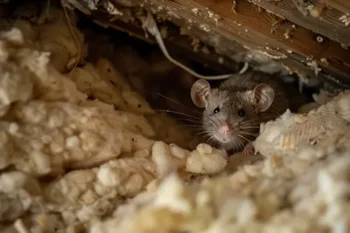
 The first step in preventing a rodent infestation in your Manhattan, Kansas City Metro, and surrounding areas home is learning how to spot the signs. Mice and rats typically stay hidden during the day while traveling through walls and crawl spaces at night in search of food and shelter. Even though they avoid human contact, they often leave clues behind. Recognizing these warning signs can help you catch a rodent problem early.
Six warning signs of a rodent problem. Click to jump to any section:
What Are the Six Warning Signs of a Rodent Problem?
Long before you ever see a mouse or rat, rodents often leave evidence that they’ve moved in. Scratching sounds, gnaw marks, and other subtle clues can indicate hidden activity inside your home. Identifying these signs early can help stop an infestation before it grows.
The following signs may indicate mice or rats have entered your home:
Droppings
This is one of the most common and dependable signs that rodents may be present. The appearance, size, and shape of droppings can help determine whether you have a mouse or rat problem. Here’s what to look for:
- Rat Droppings: Larger than mouse droppings, rat droppings typically measure about 1/2 to 3/4 inch long and have rounded or blunt ends, often resembling small beans or olive pits. Fresh droppings are usually dark and shiny, while older droppings may fade to gray, develop a dusty appearance, and crumble easily when disturbed.
- Mouse Droppings: Smaller than rat droppings, mouse droppings are generally about 1/8 to 1/4 inch long and have a rice-like shape with pointed ends. Because a single mouse can leave behind 50 to 80 droppings each day, they are often discovered in areas where mice travel, such as cupboards, drawers, along baseboards, and inside hidden spaces.
Look for signs of rodents in hard-to-reach spaces, including behind appliances, under sinks, inside cabinets, and around baseboards where droppings and chew marks may be present.
Gnaw Marks
Rodents need to chew regularly because their front teeth continue growing throughout their lives. This constant gnawing can damage your home and create potential safety hazards. Watch for these common signs of rodent chewing:
- Rats: Leave behind larger, deeper gnaw marks caused by their powerful teeth. They can chew through materials such as wood, plastic, and soft metals like aluminum, often creating more noticeable damage than mice.
- Mice: Leave small, delicate chew marks that look like tiny scratches. These marks are commonly found on materials such as wood, cardboard, and insulation as mice create nesting areas or search for food.
Inspect wall corners, cabinets, food packages, and areas near electrical wiring for signs of chewing. Damaged wires are a strong indicator of rodent activity and can create a serious fire risk.
Nests and Nesting Material
To build their nests, rodents often gather and shred materials such as paper, insulation, and fabric found around your home. Their nesting areas may be concealed, but the evidence they leave behind is often easier to spot. Look for these signs:
- Norway Rat Nests: Norway rats use shredded materials to build nests inside sheltered areas. They often create nests in burrows, basements, crawl spaces, or along the foundation of a home where they can remain protected.
- Roof Rat Nests: As excellent climbers, roof rats typically build nests in elevated locations such as attics, ceilings, and other hard-to-reach areas where they can stay hidden and secure.
- Mice Nests: Mice create small nests made from finely shredded materials that often look like loose balls of soft fluff. These nests are commonly found behind appliances, inside cabinets, within wall spaces, or in the corners of rarely used drawers.
- Pack Rat Nests: Pack rats build nests from a variety of collected materials, including twigs, leaves, paper, insulation, and other debris. They often create nests in quiet, protected areas such as attics, garages, sheds, crawl spaces, or around the exterior of homes where they can store food and collected items.
Keep an eye out for piles of torn or shredded materials, including paper, fabric, insulation, or plant matter, that may be tucked away in secluded spaces.
Need a Gutter Cleaning Estimate for Your Home?
Tracks and Rub Marks
Repeated rodent movement can create noticeable “highways” throughout your home. As they travel, rodents leave behind oily streaks and smudges that stand out on clean surfaces. Be aware of these signs:
- Tracks: In quiet, dusty, or rarely disturbed areas of your home, rodents may leave behind footprints or tail marks as they travel. Placing a light layer of flour or cornstarch along a suspected pathway can help reveal new tracks by the following day.
- Rub Marks: When rodents repeatedly travel along walls, baseboards, and other surfaces, the oils and dirt from their fur can leave behind dark, greasy streaks. More noticeable marks often indicate areas with heavier rodent activity.
Even small signs can point to a larger rodent issue. Recognizing evidence like tracks and greasy rub marks early can help prevent a minor problem from turning into a major infestation.
Strange Noises
Many rodents become active once the house is quiet, making nighttime the best time to notice their activity. Scratching, scurrying, and other sounds may reveal that rodents are nearby. Listen for these signs:
- Gnawing: Rodents create chewing sounds as they use their teeth to break down materials like wood, electrical wiring, insulation, and other objects throughout your home.
- Squeaking: High-pitched squeaks may indicate rodents communicating with one another or reacting to stress, fear, or danger.
- Scurrying: Quick, rapid movements can create shuffling or running sounds, often heard beneath floors, inside walls, or above ceilings.
- Scratching: Light, repetitive scratching noises may come from rodents moving through wall cavities, ceilings, attics, or other hidden areas.
After nightfall, listen for unfamiliar sounds in your attic, kitchen, and other quiet areas of your home where rodents are likely to travel.
Actual Rodents
A rodent infestation may continue unnoticed until signs of activity become more obvious. Identifying the species involved is the first step in developing an effective control plan. Manhattan, Kansas City Metro, and surrounding areas homeowners commonly encounter these rodents:
- House Mice: House mice are one of the most common rodents found around homes. Small in size and highly adaptable, they can live in a variety of environments and often build nests inside walls, cabinets, storage areas, or other secluded spaces where they can find shelter.
- Norway Rats: Also called brown rats, Norway rats are larger and more powerful than mice. They commonly create burrows near foundations, basements, and crawl spaces, and their strong teeth allow them to chew through various materials, potentially causing significant property damage.
- Roof Rats: Roof rats are slender, agile rodents known for their climbing abilities. They often nest in elevated areas such as attics, ceiling spaces, and trees, using their skills to access hard-to-reach locations throughout a home.
- Deer Mice: Deer mice are commonly found near wooded areas and are recognized by their two-toned fur and large eyes. While they are typically outdoor rodents, they may enter homes for shelter and can pose health concerns due to their ability to carry diseases.
- Pack Rats: Pack rats are medium-sized rodents known for collecting and storing a variety of objects near their nests. They often build nests in attics, garages, sheds, and other sheltered areas, where they may gather insulation, plant materials, and household items. Pack rats can also chew on wiring and other materials, creating potential property damage.
Seeing even one rodent inside your home can be a sign that more are hiding nearby. Contacting a professional rodent exterminator quickly can help prevent the problem from becoming worse.
Suspect a Rodent Problem? Contact American Pest Management Today
Rodent signs inside your Manhattan, Kansas City Metro, and surrounding areas home should never be ignored, as they may indicate an active infestation. Discovering these warning signs early allows you to take action before rodents have more time to reproduce and cause additional damage. Quick attention can help protect your property while reducing the stress and expense associated with a larger infestation.
When you contact American Pest Management, our professionals will carefully evaluate your home and recommend the best approach for your situation. From inspection to treatment, we’ll keep you informed and provide the expert guidance needed to address your rodent problem effectively.
Reach out to American Pest Management today for trusted rodent control services, helpful information, and a complimentary estimate.


